
“Made in Italy” is a legally defined origin claim; “Italian style,” “Italian design” and “Italian inspired” are marketing phrases with no manufacturing content whatsoever. The price gap between the two realities on a single dining chair can be a factor of ten, and the burden of telling them apart falls, in practice, on the buyer. This guide arms that buyer with the legal definitions, seven red flags, five green signals, a seller interrogation table and a one-card memo for the phone. For readers studying how this level of craft appears in current production, Modenese Furniture is a useful reference point for Italian classic furniture, carving, finishes and room-scale collections.
What “Made in Italy” Legally Means, and What “Designed in Italy” Does Not
Two legal layers govern the label. Under EU customs law, a product’s non-preferential origin is the country of its last substantial transformation, so furniture substantially manufactured in Italy may carry “Made in Italy” even with some imported components. Italian national law goes further: Decree-Law 135/2009 (Article 16, converted into Law 166/2009) reserves “100% Made in Italy” for products whose design, manufacturing and packaging all take place in Italy, and prosecutes false origin claims under Article 517 of the Italian Penal Code. The history and scope of the label are documented under Made in Italy.
“Designed in Italy,” “Italian style” and “Italian quality” sit outside both layers: the phrases promise an aesthetic, not a workshop. A container of chairs can be carved, finished and upholstered 9,000 kilometers from Milan and sell legally under an Italian-sounding brand with “Italian design” on every page, provided nobody writes the three regulated words. The deception, where deception exists, lives in implication, which is why the buyer’s defense below targets implications.
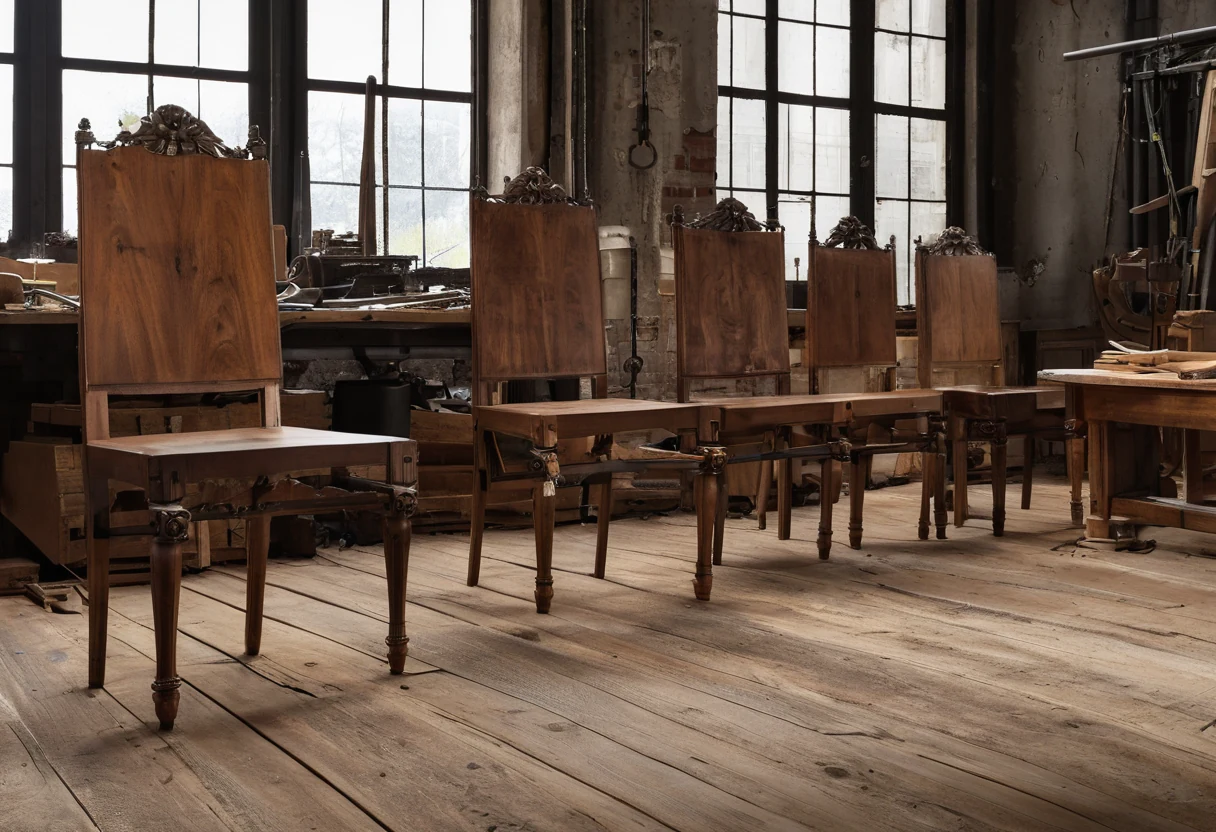
Seven Red Flags That “Italian” Furniture Was Never Near Italy
- The wording dodge. Product pages saying “Italian design,” “Italian style” or “European craftsmanship” while never stating country of manufacture. Origin that exists gets stated; origin that gets implied usually does not exist.
- A price below the labor floor. Italian workshop labor costs €35 to €60 per loaded hour in 2026, and a genuinely hand-carved chair contains 60 or more such hours. A “hand-carved Italian” chair retailing at $900 cannot contain Italian hours; arithmetic is the cheapest authentication tool there is.
- No factory, no address. The seller is a showroom or web brand with no named manufacturing site. Real workshops state where they are because the place is the product.
- Catalog without process. Glossy room shots, zero photographs of benches, carvers, finishing lines or the building itself. Manufacturers photograph manufacturing.
- “Handmade,” available now, in any quantity. Bespoke production runs 8 to 24 weeks; stacks of identical “handmade” pieces shipping tomorrow describe a container, not a workshop.
- Missing materials paper. No wood species by botanical name, no finish system, no upholstery composition. Houses that buy walnut by the cubic meter can name it.
- Evasion about visits. The request “may we video-call from the factory floor?” answered with deflection ends the investigation; in the affirmative case the call costs the seller fifteen minutes.
Five Green Signals of the Genuine Article
- A verifiable legal identity: full company name and VAT number (Partita IVA), checkable in the Italian business register at registroimprese.it.
- Open doors: factory visits and live video tours offered without ceremony, often proudly.
- Honest lead times: quoted in weeks (8 to 24 for bespoke pieces), with production milestones a client can ask about mid-order.
- A documentation pack as standard: origin declaration, wood species, finish system, upholstery composition, care instructions and warranty terms, delivered with the piece, not extracted from the seller afterward. Factories that publish their quality control process are showing exactly the layer imitators cannot photograph.
- Industry anchoring: membership in the sector’s institutions (FederlegnoArredo, the Italian wood-furniture federation, lists its member companies) and participation in the Salone del Mobile under the maker’s own name, not a trader’s.
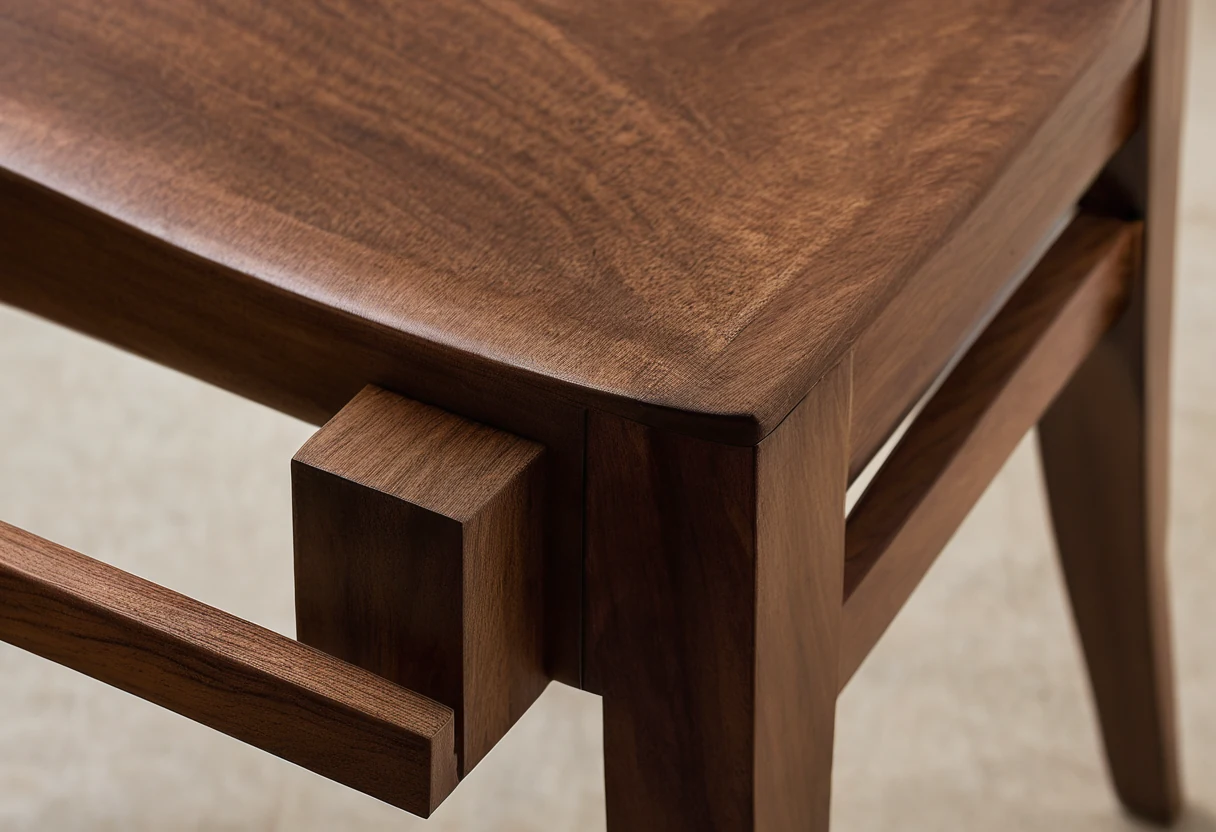
The Interrogation Table: Five Questions, Two Kinds of Answers
| Question to the seller | The good answer sounds like | The evasive answer sounds like |
|---|---|---|
| Where exactly is this piece manufactured? | “Our workshop in [town], Italy; here is the address.” | “It’s an Italian brand with global production.” |
| What is the wood, by species? | “European walnut, solid frame, walnut veneer on the panels, beech in the seat frame.” | “Premium hardwood.” |
| How long will my order take? | “Fourteen to eighteen weeks; carving starts week three.” | “In stock, ships this week.” (for a “handmade” piece) |
| Can we video-call the factory floor? | “Tuesday morning suits the workshop.” | “Production is confidential.” |
| What documents come with the piece? | “Origin declaration, materials sheet, care card, 5-year structural warranty.” | “A certificate of authenticity.” (one laminated page, no specifics) |
One Purchase, Dissected: How a $14,000 “Italian” Dining Set Goes Wrong
A composite case from regional buyer practice, anonymized but typical. A client pays $14,000 for an eight-chair “luxury Italian” dining set from a showroom with an Italian-sounding name: the website says “Italian design heritage,” the salesman says “European production,” the contract says nothing. Delivery takes three weeks (flag 5). The carving shows perfectly uniform machine ripples under raking light, the chair undersides are stapled rubberwood (a Southeast Asian plantation species), and the “walnut finish” is a printed grain foil that chips white at the first knock. Total Italian content of the purchase: the adjective. The same budget at a genuine workshop buys four to six authentically carved solid-walnut chairs with documents, delivered in eighteen weeks, and the client’s actual loss is not the $14,000 but the decade of believing the set was something else.
The Phone-Screen Memo Card
Eight lines cover the whole defense. Saved to a phone, the card takes ninety seconds to run in any showroom on earth.
- Ask where it is made; accept only a town and an address.
- Run the labor math: hand-carved + Italian + cheap = pick one to delete.
- Demand species, finish and composition in writing.
- Treat instant availability of “handmade” as a verdict.
- Request the factory video call; watch the reaction, not the calendar.
- Verify the VAT number in the public register.
- Expect a documentation pack, not a “certificate.”
- Remember the legal line: “Made in Italy” is regulated, “Italian style” is air.
The economics underneath are worth stating once without politeness: imitation survives because implication is free and verification feels awkward. The eight-line card moves the awkwardness back across the table, where the margin lives, and genuine workshops pass it without noticing a test happened.